.jpeg)

Once upon a time, open-plan living was the dream. It was the hallmark of stylish, contemporary design; everywhere homeowners were knocking down walls, removing doors and basking in light-filled expansive spaces.
But then real life happened.
We stopped commuting. We started working from home. The kids needed a quiet space for homework, and we needed a door to close for back-to-back video calls.
In short: our lives changed, but our homes didn’t.
Enter: Broken-Plan.
This is open-plan’s grown-up sibling. Still light-filled. Still airy. But far more clever. It offers the spacious feel of open-plan, with built-in zones for work, rest, and play — because sometimes you want to be together, and sometimes you don’t.
Why It Matters
Post-pandemic, our homes are being asked to do more than ever before. They’re offices, classrooms, yoga studios, 24-hour cafes, sanctuaries. That’s a lot to ask for one big room.
Sure, open-plan lets you keep an eye on the kids. But what about when they’re older and craving their own space? And large open-plan spaces can be hard and expensive to heat, which isn’t exactly the best idea in a world of rising energy costs and limited resources
People need separation, not isolation.
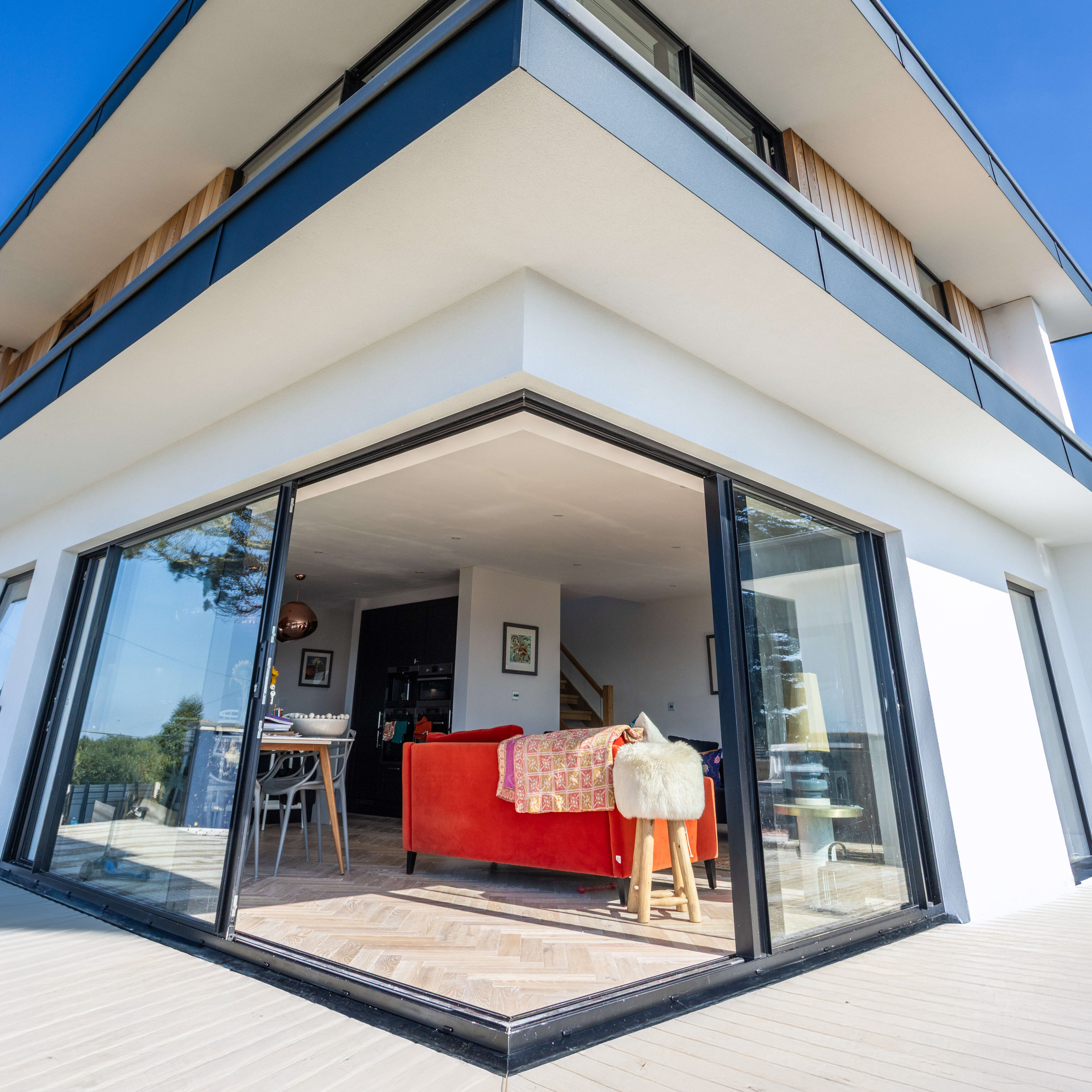
By introducing subtle partitions — glazed walls, sliding screens, freestanding furniture, half-height dividers — we can create a hybrid of open-plan and closed rooms without chopping up the floorplan.
Design In Action: Les Pres
We brought the broken-plan concept to life at Les Pres, a reimagined bungalow for grown-ups and growing kids. Here’s how it works:
- Small footprint, big feel: Despite the modest size, the space feels expansive and open.
- Natural flow of spaces: The kitchen rolls effortlessly into the dining area, which opens into the lounge, and then into a private snug. Each zone transitions smoothly without hard stops.
- Different zones, different moods: Each area catches light differently throughout the day, giving every space a unique atmosphere.
- Continuous sightlines: From the lounge, you can see through to the dining space, kitchen, snug, stairs, terrace, and even out to the garden. It’s all connected visually.
- Zoned without boxed in: Even with this openness, every zone feels intentional. The snug offers privacy and quiet, while the lounge remains bright and social.
It’s a layout that adapts to the family’s needs: together when they want it, separate when they need it.
Insider tips
Here are practical ways to bring broken-plan living into your home (without closing off the space)
Soft Dividers
- Use partial walls or glass screens to define spaces without blocking light.
- Float furniture like bookcases or sofas to gently separate zones.
- Try a folding screen or curtain in a bold fabric — it adds character and control.
Play with Levels and Lines
- Use steps, ceiling drops, or changes in flooring to signal different areas.
- Think in sightlines: what can you see from your sofa, your desk, your kitchen island?
- Paint - add feature walls or paint affects to define a space
Layered Functionality
- Reintroduce the serving hatch (yes, really) — it lets conversation flow while keeping the mess tucked away.
- Add doors to snugs, home offices or guest rooms for optional privacy.
- Prioritise natural light and how it moves throughout the day to guide your layout.
Whether you're building from scratch or untangling a tired layout, broken-plan can make your home more usable, more comfortable, and more you.
Ready to rethink your space without tearing it all down? Let’s sketch it out together.

.png)