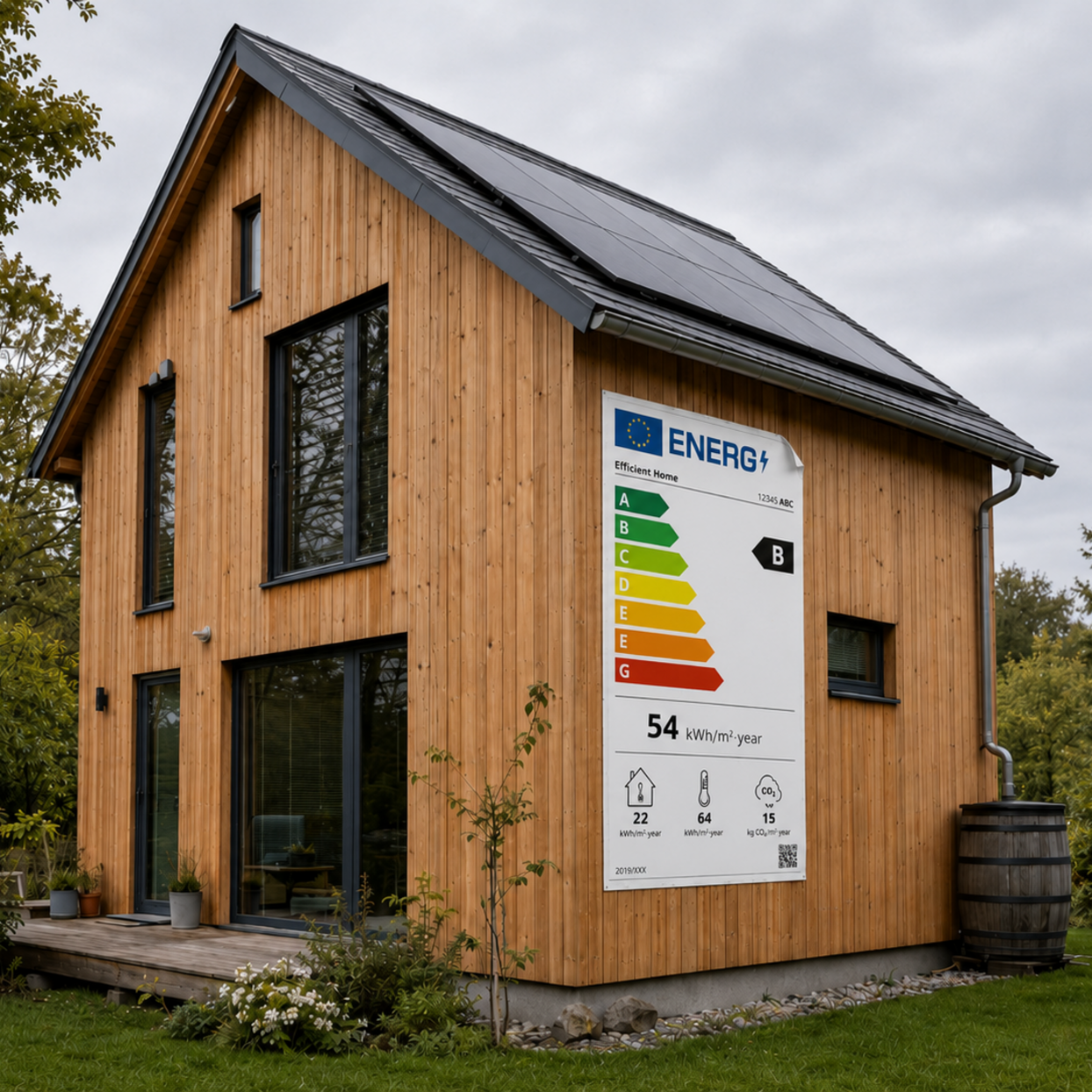
An EPC (Energy Performance Certificate) rates how efficiently your home uses energy, from A (best) to G (worst) - much like the energy rating sticker on your fridge or washing machine.
In Guernsey, they’re not mandatory yet. But they’re getting harder to ignore.
Think of an EPC as:
- a shortcut to understanding running costs
- a signal of build quality
- something future buyers will absolutely look at
- a step towards where regulation is likely heading
It’s not just paperwork. It’s a reflection of how well your home is put together.
How the rating is worked out
The rating comes from a standardised assessment — SAP, for new homes — that looks at the key parts of the building: insulation, glazing, airtightness, heating systems, ventilation and any renewables.
From all that, it estimates energy use, carbon emissions and likely running costs. It won’t predict your exact bills, but it gives a clear indication of how hard your home will have to work to stay warm and comfortable.
And a good rating doesn’t happen by accident. It’s the result of decisions made early — how well the fabric performs, how heat is retained, and how the systems support it.
Why two homes with the same rating can feel completely different
Here’s the part most people don’t realise.
An EPC is only part of the story. It won’t tell you how a home actually feels to live in — whether there are draughts, cold spots, or rooms that never quite warm up. Two homes with an identical rating can perform very differently in reality, depending on how well they’ve been designed and detailed.
That’s the gap between a certificate and a home that genuinely works. The number tells you something useful. The design and the detailing tell you the rest.
Why EPCs are becoming harder to ignore
Buyers are paying closer attention to running costs. Lenders are starting to link better-performing homes to green mortgage products. And with Guernsey’s carbon targets, expectations around energy performance are only going one way.
So while it may look like a simple certificate, it’s increasingly a reflection of build quality, running costs and long-term value — a useful benchmark for how your home will perform over the years you live in it.
Could better performance reduce your mortgage costs?
This is where it gets interesting.
Energy performance has been creeping into lending decisions — and it’s reached Guernsey. Some lenders now offer green or eco-mortgages for homes that perform well, which can mean better rates and more favourable lending terms.
So a better-performing home can save you money twice: once on your energy bills, and again on your mortgage.
Not a bad return for decisions made at design stage.
If you’re planning a project
You don’t need all the answers.
But you do need the right conversations - early enough that they can still shape the outcome. You can read here about what questions to ask before you design anything.
Because the real cost isn’t always what you spend upfront, it’s what gets baked into the building and shows up every month after.
Planning a renovation, extension or new build? You don't need the answers yet - just the right conversations. Let's start one here.

.png)